Showing posts with label Africa. Show all posts

Monday, June 17, 2013

Quality of Mortality Statistics from Civil Registration in South Africa

Two World Health Organization comparative assessments rated the quality of South Africa’s 1996 mortality data as low. Since then, focussed initiatives were introduced to improve civil registration and vital statistics. Furthermore, South African cause-of-death data are widely used by research and international development agencies as the basis for making estimates of cause-specific mortality in many African countries. It is hence important to assess the quality of more recent South African data.

The authors employed nine criteria to evaluate the quality of civil registration mortality data. Four criteria were assessed by analysing 5.38 million deaths that occurred nationally from 1997–2007. For the remaining five criteria, we reviewed relevant legislation, data repositories, and reports to highlight developments which shaped the current status of these criteria.

National mortality statistics from civil registration were rated satisfactory for coverage and completeness of death registration, temporal consistency, age/sex classification, timeliness, and sub-national availability. Epidemiological consistency could not be assessed conclusively as the model lacks the discriminatory power to enable an assessment for South Africa. Selected studies and the extent of ill-defined/non-specific codes suggest substantial shortcomings with single-cause data. The latter criterion and content validity were rated unsatisfactory.

In a region marred by mortality data absences and deficiencies, this analysis signifies optimism by revealing considerable progress from a dysfunctional mortality data system to one that offers all-cause mortality data that can be adjusted for demographic and health analysis. Additionally, timely and disaggregated single-cause data are available, certified and coded according to international standards. However, without skillfully estimating adjustments for biases, a considerable confidence gap remains for single-cause data to inform local health planning, or to fill gaps in sparse-data countries on the continent. Improving the accuracy of single-cause data will be a critical contribution to the epidemiologic and population health evidence base in Africa.

Joubert J, Rao C, Bradshaw D, Vos T, Lopez AD (2013)

Evaluating the Quality of National Mortality Statistics from Civil Registration in South Africa, 1997–2007

PLoS ONE 8(5): e64592. doi:10.1371/journal.pone.0064592

Tuesday, August 16, 2011

Information on Safe Abortion Should Be Made Easily Accessible

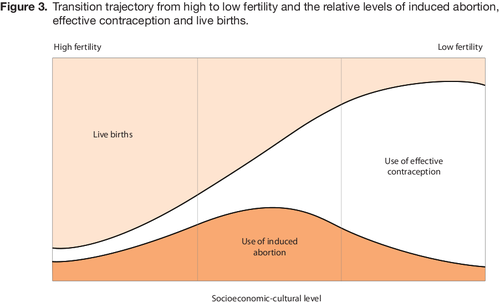
Абортно-контрацептивный переходA booklet consisting of a collection of women's stories on unsafe abortion and sexual health was launched in Windhoek recently, with the aim to influence countrywide research on unwanted pregnancies, unsafe abortions and baby dumping.

Jennifer Gatsi-Mallet of the Namibia Women Health's Network (NWHN), said that the aim of the booklet is to ensure that information on legal abortion (legally permitted by the 1975 Abortion and Sterilisation Act indications) is made available to women and is visible in all health centres.

According to Gatsi-Mallet, the organisation undertook the project seeing that there is a lack of information on the indicated legal abortion.

"We have high incidents of rape, gender based violence and if women know about the indicated legal abortion, they will seek emergency contraception soon after a rape or gender based violence," she said.

According to Gatsi-Mallet, at present there is lack of data available especially on abortion, although it is legally permitted by the 1975 Abortion and Sterilisation Act in cases of danger to a woman's life, danger to a woman's physical or mental health, pregnancy due to rape and incest as well as cases of foetal malformation that could result in a seriously handicapped child.

"Very few people seem to be aware of these legal indications. ...whereas the law speaks about medical practitioners being allowed to provide abortion care, in practice this is interpreted to mean that only physicians are allowed to do so. This may be because of current regulations stating that nurses are prohibited from certain tasks related to complications of pregnancies, but in December 2009 a meeting convened by the National Planning Commission agreed that nurses should be allowed to provide emergency obstetric care," she added.

The lack of emergency contraceptive use and access to safe legal abortions, are contributing factors to the problem of abandonment of newborns, which is acknowledged to be a serious problem in the country, Gatsi-Mallet further said.

"In April 2008, officials at Windhoek's Gammams Water Treatment Works reported that, on average, each month 13 bodies of newborn infants were found among human waste from toilets. As the testimonies in this booklet show, fear of arrest prevents some young women from seeking post-abortion care. If they do seek care, they may not receive optimal treatment," she added.

In order to improve the situation, Gatsi-Mallet recommended that consideration could be given to mid-level health workers so that they can be trained to provide safe early abortion. "Training and equipping mid-level workers can help ensure appropriate service availability and accessibility without compromising safety, especially where doctors are few. The World Health Organisation (WHO) has indicated that such mid-level healthcare providers can provide safe abortion care."

In the meantime, she said that implementing the current abortion law to make safe abortion accessible, as well as providing up-to-date post-abortion care with methods recommended by WHO, would benefit women as well as the health system.

The launch of the booklet project is in line with NWHN's mandate to strengthen the capacity of women through advocacy and information to improve their health and empower them to become leaders at the local and national level. NWHN works with women across the country in all 13 regions and it has a membership record of 1650.

Source: All Africa, 12 August 2011